
THREE THINGS
…concision…

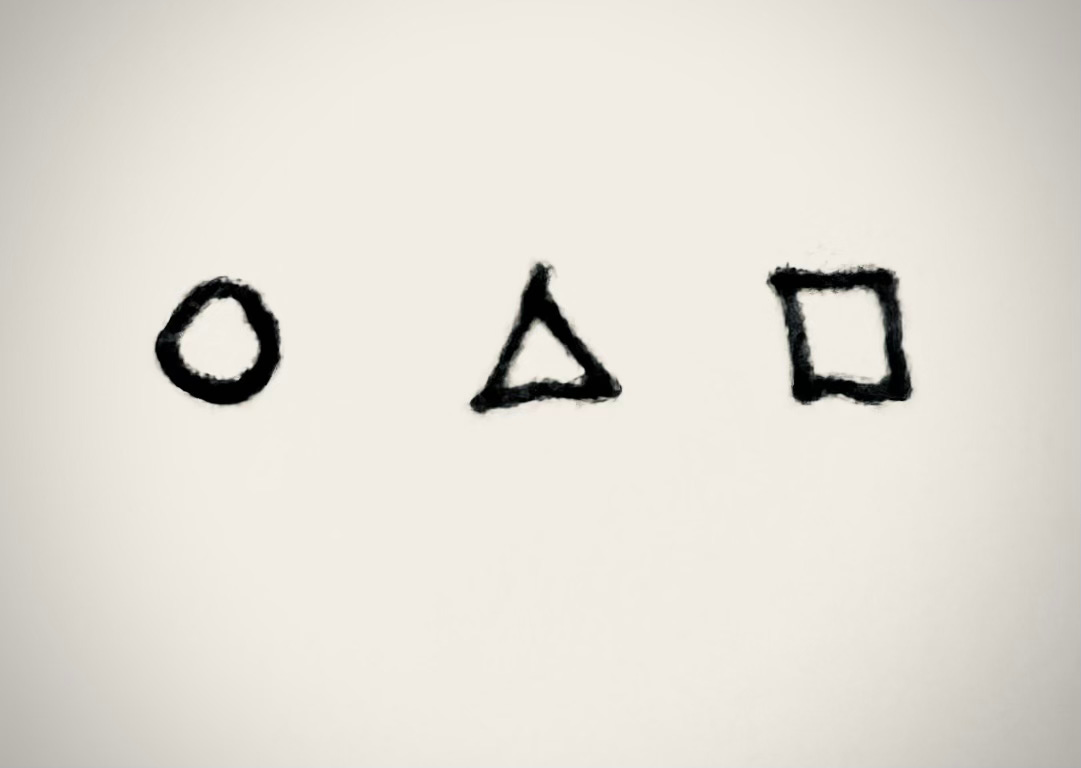
…so, Elsa—my daughter—and I were laughing about an overlong text message. A text, meant to be light as a tap on the shoulder, had swelled into a miniature manifesto. It felt slightly inconsiderate, as though the sender forgot the smallness of the form and the attention of its reader.
That moment reminded me of a wise mentor who once took my multi-page list of annual goals, scanned it, and said simply: “Reduce it to three. Three things are all we can hold without losing them.”
With time, I’ve come to see the truth in that. Not because our attention spans have thinned, but because our minds have always been finite and delicate. We can think deeply about only a few matters at once. We can pursue many things haphazardly, or a few things well.
Concision, when done with care, carries a kind of brilliance. Raymond Carver achieves it in a page; David Shrigley in a drawn line; Johann Sebastian Bach in the notes that open the Goldberg Variations—a melody pared back to its luminous essentials. Monumental works have their place, but scale often courts hubris and megalomania. Humility, by contrast, invites clarity.
Yet we live in a time that prizes the opposite: leaders performing certainty and people mistaking confidence for truth. Pride has become a posture. Doubt—once a tool of inquiry—now seems unfashionable.
Research by Mark Leary at Duke University shows that intellectual humility correlates with open-mindedness, clearer reasoning, and better relationships. It is one of those capacities that grows by subtraction: letting go of grandiosity so that perception can sharpen. It is, in its own way, a discipline of “three things.”
Concision feels aligned with that spirit. A short message respects the reader. A brief idea is something the mind can cradle without strain. Brevity restores the human scale—a small glass of water instead of a torrent.
Socrates reminds us we know nothing; Zen reminds us that small acts, done attentively, shine. Both philosophies point toward the essential: fewer desires, fewer declarations, clearer intent that allows the reader or listener to participate rather then being explained to.
I have often written or spoken at length, letting thoughts spill unedited. But wordiness is easy. Concision requires judgment—an editorial scalpel removing the unnecessary. To choose what remains is to reveal what matters.
So perhaps the task is simple: distill and remain humble. Let three things guide you. Let the rest fall away. Let others run with your thoughts.
Keep well, and keep it short…