
TERROIR
…retaining our human roots…

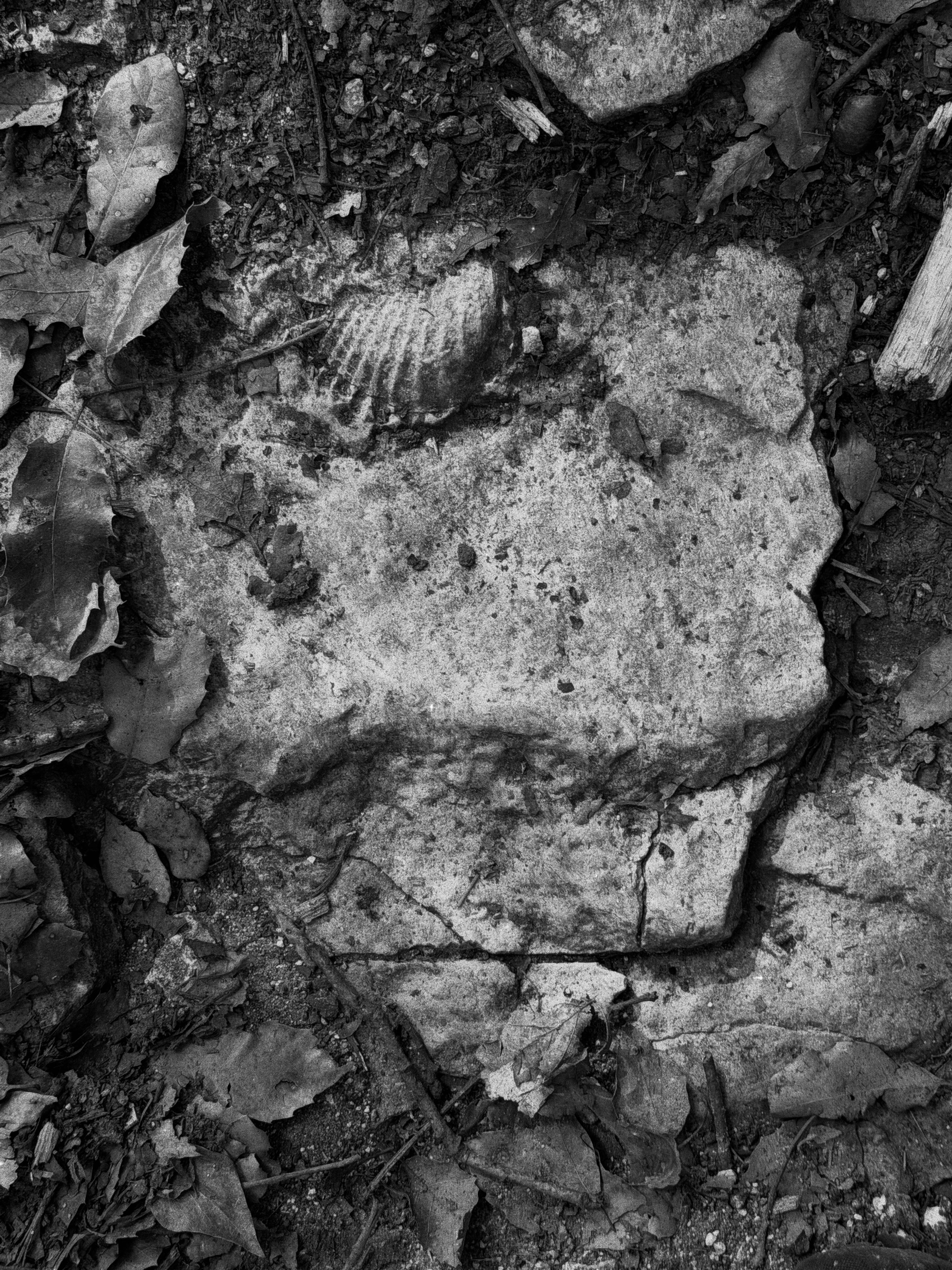
…so, I have heard the word terroir used countless times over the last decades of my life. It is usually employed by those describing food, or attempting to understand the cultures of countries such as France or Italy. One can readily grasp its etymology and the way it connects the work of artisans to the earth itself. It is as local as the colour and composition of the soil beneath their feet.
And yet the word often seems strangely disembodied, separated from the very ground from which it springs—like fossils in a museum. Even among wine experts, for whom terroir is a central concept, the commentary can feel curiously detached from the chalk and limestone from whence the wine itself emerged.
I was recently listening to Matt Gibberd’s podcast Homing and his conversation with Patrick Williams, founder of the interior design firm Berdoulat in Bath, named after the house his parents owned in France during his childhood. During the interview, Williams describes a dish his parents affectionately called “The Truth”. It came from Elizabeth David’s French Provincial Cooking, in which she quotes the French gastronome Francis Amunatégui on Saucisson Chaud à la Lyonnaise:
“The appearance of a hot sausage with its salad of potatoes in oil can leave no one indifferent… it is pure, it precludes all sentimentality, it is the Truth.”
That idea of “truth” seems intimately connected to terroir. There is something almost perfect in its wholeness. The cervelas sausage comes from around Lyon. The ratte potatoes from the surrounding countryside, seasoned simply with fleur de sel and virgin olive oil from nearby Provence. Add in the midday heat, the drone of cicadas, and a table outside an old farmhouse in the South of France, and all the elements begin to converge. Food, sounds, scents, sunlight—each contributes to a complete and immersive experience.
Perhaps that is what terroir really is.
Not merely a focus on locality, but rather full-on fidelity. (Funnily enough, proto-analog-multimedia).
Making a concept such as this live, entails a certain faithfulness between place and experience. A certain harmony so complete that it becomes difficult to separate one thing from another. Such experiences are rare. Rare is the artist whose work is entirely rooted in the landscape that formed him (I do think of Andy Goldsworthy and Richard Long). Rare are experiences that engage all the senses and feel so authentic and whole (unless you count Disneyland!)
We have become accustomed to shipping, trade, and global abundance. We delight in spices from distant lands and carpets woven on another continent. Our tastes have increasingly turned toward the exotic and the uprooted. In doing so, we ourselves have become somewhat uprooted. Removed from the ground beneath us, we begin to lose our sense of what is genuine and what is merely imitation or hyperreal as coined by Jean Baudrillard.
When I return to France, it is one of the things I notice most: many experiences can still feel embodied, especially in the countryside. Not that France is always faithful to the idea of terroir. McDonald’s is popular. High streets increasingly resemble one another, lined with Zara stores and mobile phone shops. French teenagers listen to Olivia Rodrigo.
And yet something deeper persists.
There remains a profound reverence for local produce and regional specialties. Villages still hold annual fêtes celebrating their particular traditions. Basque choirs sing songs that have echoed for centuries. Local dances survive. The notion of terroir remains alive here in ways that many countries have abandoned in favour of an endless global menu of interchangeable choices.
And with that loss, perhaps we lose something of our humanity.
I think of the prehistoric drawings on cave walls not far from here—a literal expression of terroir manifest. I think of Monsieur Froidefond walking barefoot to his fields down the road, his feet touching the soil that sustained him and his brother throughout their lives. I think of Monsieur and Madame Delair eating soup made from vegetables grown in their garden, and of Monsieur Delair pouring the final dregs of his wine into the empty bowl to make chabrol, unwilling to waste even a drop. They sat in front of a fire heated by the wood off their land. Terroir!
I have been fortunate enough to experience terroir in all its glory. The nostalgia for experiences such as this has always offered me solace and sustenance whenever the speed and ethereal nature of modern life have distanced me from the earth.
As we move into a world increasingly mediated by screens, fibre optics, and fragments of attention, I hope we continue to seek our roots in the soil. I hope we learn to live terroir—not as a word employed by restaurant critics, but as an experience available just beyond our own thresholds.
Keep well, and may you find your own terroirs…