
RUSTICATION FOREVER!
…ad rus, ad otium…

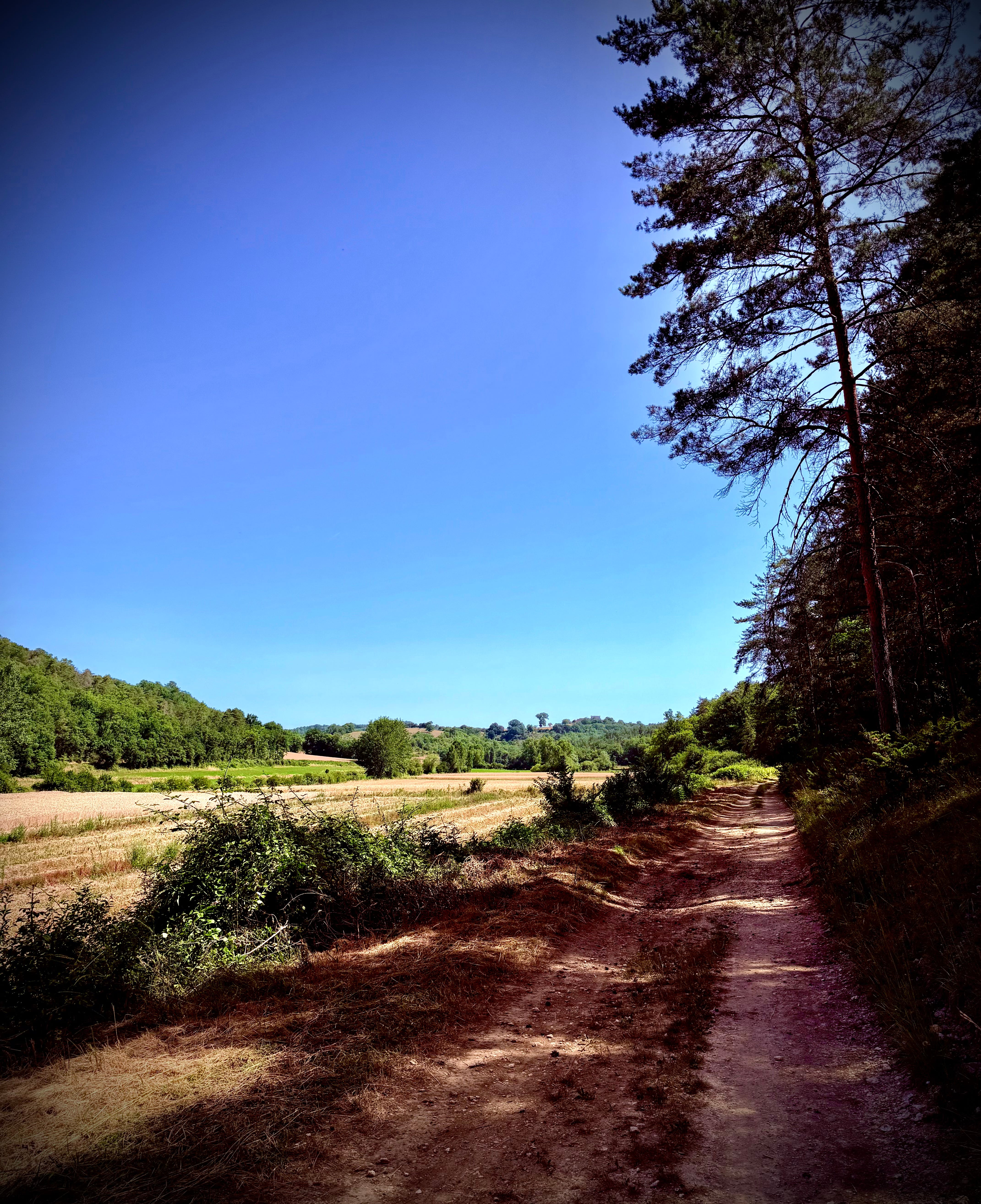
So, I walk down a gravel farm track. The hornbeams at its edge are still green, while the bracken has begun to turn brown. It has not rained for several weeks. I look down the valley towards the farm on high at Campagne. I cannot feel the breeze that must be stirring the hilltops; here, in the valley, the air is still.
It seems as though this winding path has followed the valley of the Énéa—a small stream that eventually joins the Dordogne—for centuries, perhaps millennia. It feels perennial. One imagines prehistoric families walking this same route in search of berries, mushrooms, snails, and perhaps the occasional roe deer. The path shapes the valley, and the valley, in turn, shapes the path.
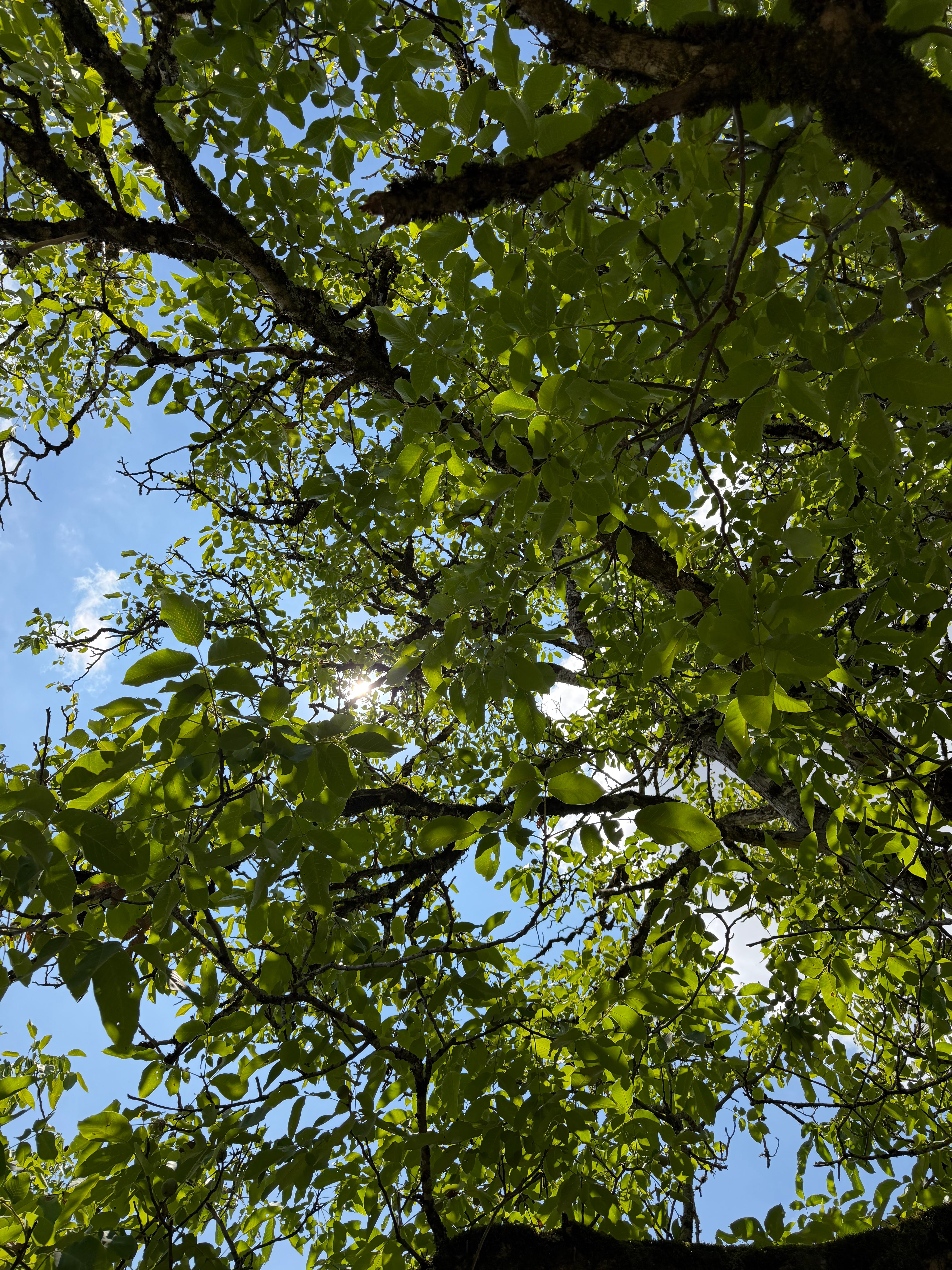
I follow it as it curves towards Eyrignac, then on to Proissans and Salignac. In the darker stretches of woodland, I can still smell the damp earth protected by shade and moss. Here I become acutely aware of the present: the dust beneath my boots, the shelter of the oaks and chestnuts overhead, the quiet movement of light through leaves. I feel both vividly alive and part of something much older than myself.
I feel rusticated and rustication is good for the soul.
I know how fortunate I am to spend a month or so each year in the countryside. Our retreat is a simple limestone house, restored just enough to be comfortable but not so much that it loses its essential character. I was saying to Kris the other day that it feels different to live in a house that is almost entirely organic. Its limestone walls come from the surrounding ground, their mortar mixed with the red earth of the neighbouring fields. The oak and chestnut beams were once local trees, while the heavy lauzes that form the roof were quarried from the limestone of the Dordogne and Vézère valleys.
Because the house belongs so naturally to the landscape, it is home not only to us but also to sparrows nesting in its walls, ants finding hidden passages beneath the roof, and countless other creatures that quietly share the space. The house does not feel imposed upon the countryside; it seems to emerge from it.
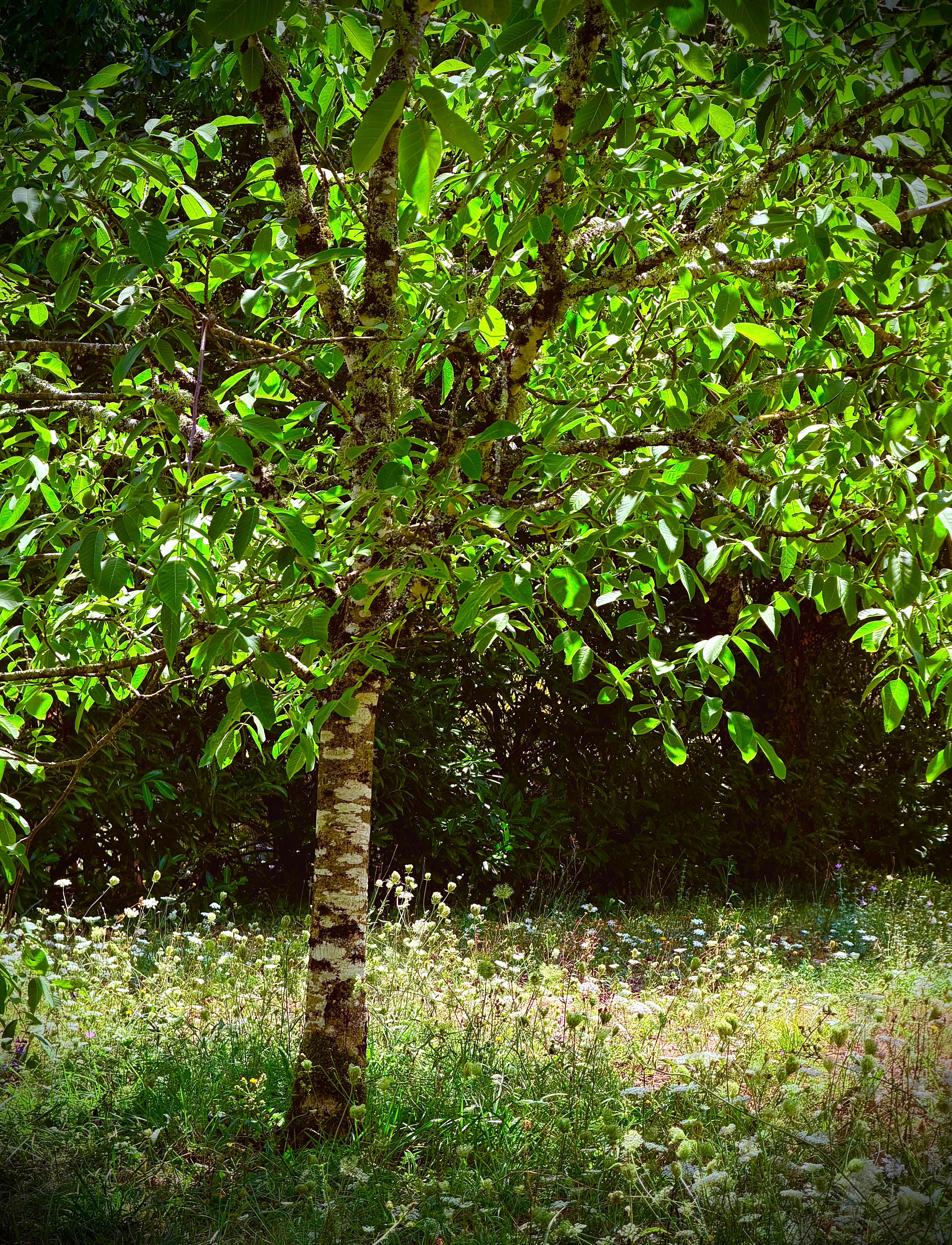
That, perhaps, is the gift of such places. They invite simpler pleasures: walking beneath a green canopy, allowing time to think without distraction, paying attention to the present while letting the mind wander. One lives not in spite of nature, but alongside it and beholden to it
In the spirit of Horace and Montaigne, one discovers a rhythm more closely attuned to the natural world—less hurried, less distracted, less fragmented. Thought becomes clearer. Living becomes lighter. We also know, both instinctively and through an increasing body of research, that green spaces restore attention, reduce stress, and improve well-being. Nature grounds us. We feel less at odds with the world and more at home within it.
I realize how privileged I am to have access to such a place. Yet I wonder whether rustication need not depend entirely upon o dwelling elsewhere. Perhaps it can be cultivated in smaller ways. Watching the dance of sunlight through the leaves of a tree, much as the protagonist does in Perfect Days in the heart of Tokyo. Taking a train into the countryside simply to walk in quieter landscapes. Reading deeply about wild places, forests, mountains, and stormy seas. There are many ways to rusticate ourselves, even when prolonged escape is impossible.
We celebrate progress. We celebrate technology. We celebrate cities. And rightly so. Yet, we should not forget that we are not separate from the natural world but inseparably connected to it, dependent upon it for much of our physical and psychological well-being. IRL is not entertainment but a human necessity
To rusticate from time to time is to remember our place within an older, slower, and ultimately more truthful world. Such immersion gently recalibrates our expectations, drawing them back towards the “golden mean”—towards a life that is more measured, more humane, and ultimately more satisfying. Instead of the perpetual thirst created by ever-rising expectations and hubristic ideas like possible interplanetary colonization or intelligent agents doing our bidding or not, rustication reminds us that contentment often lies not in having more, but in belonging more fully in rather modest ways. It is just a small step not massive leaps that we need
Keep well—and rusticate in any way you can…