
DUSKING
...the wisdom of betwixt...

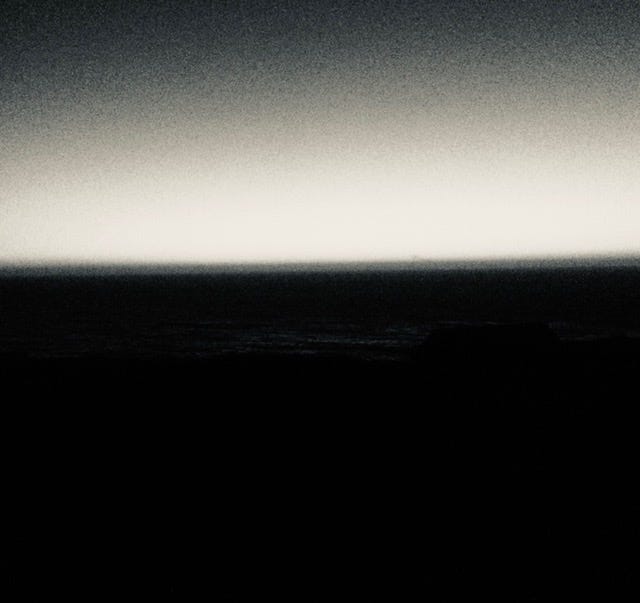
…so, I have always liked the in-betweens. Corridors. Edges of property lines. Territories that are neither one thing nor another. Animals that seem to belong to two worlds—a platypus, a chrysalis. The moments between before and after.
Moreover, Janus has always been my favorite classical deity: the god of thresholds, of transitions between states. Perhaps for that reason I am most comfortable in the decision-making grey zones rather than in the black and white of fixed principles. It may also explain why I am drawn to twilight—both in the morning and in the evening.
This has little to do with the modern fascination with twilight—television series, vampires, or teenage drama—though I do admit to liking the gothic, the half-light, the color black perennially.
In my office I once had a writable wall where I kept two favorite words: crepuscular and palimpsest. I wanted to see them each day. Half-light and overwritten vellum—two ideas that felt like symbols of a personal creed: a belief that we are constantly involved in rewriting and evolving. To believe otherwise is a delusion.
This written arrangement on my wall ended when a visitor told me the words looked intellectually pompous hovering over my shoulder during meetings. After he left, I rubbed them away, but their ghosts remained faintly on the wall—like the very thing they represented: traces of something that was—a twilight of words and ideas.
Given this fondness for fading light, I was intrigued to read in The Guardian about Marjolijn van Heemstra’s revival of a nearly forgotten Dutch ritual called “dusking”—schemeren. The practice is simple: sit outside in the late afternoon and watch the light fade as shadows lengthen and the horizon dissolves.
It is said to be calming and grounding. I can attest that it is. Watching the light soften, letting the eyes adjust to darkness, feeling the steady turning of the world—these are things our bodies once knew well. Animals still do.
Dusking is not about chasing spectacular sunsets. It is about noticing the slow shift of light and accepting the arrival of darkness—not as foreboding, but as something natural and companionable.
There is comfort in realizing that our lives are rarely like dramatic sunsets. They are mostly composed of the in-between moments: waiting, dimming, adjusting: Crepuscular lives.
Perhaps we should respect these twilights—these in-betweens. Our identities, values, and convictions are not fixed monuments but shifting horizons. We are always evolving, always somewhere between light and dark.
Keep well. Sit in the in-between. Watch the dusk deepen…
Ecological edges, whether natural or anthropogenic--where biodiversity thrives compared to the adjacent and surrounding habitats.
What do you think about plasticity and pentimento? Adore twilight and often wake up early to see the dawn. I am also a fan of vampires…Great essay!!