
DÉPAYSEMENT
…the closer, the odder, and more provoking

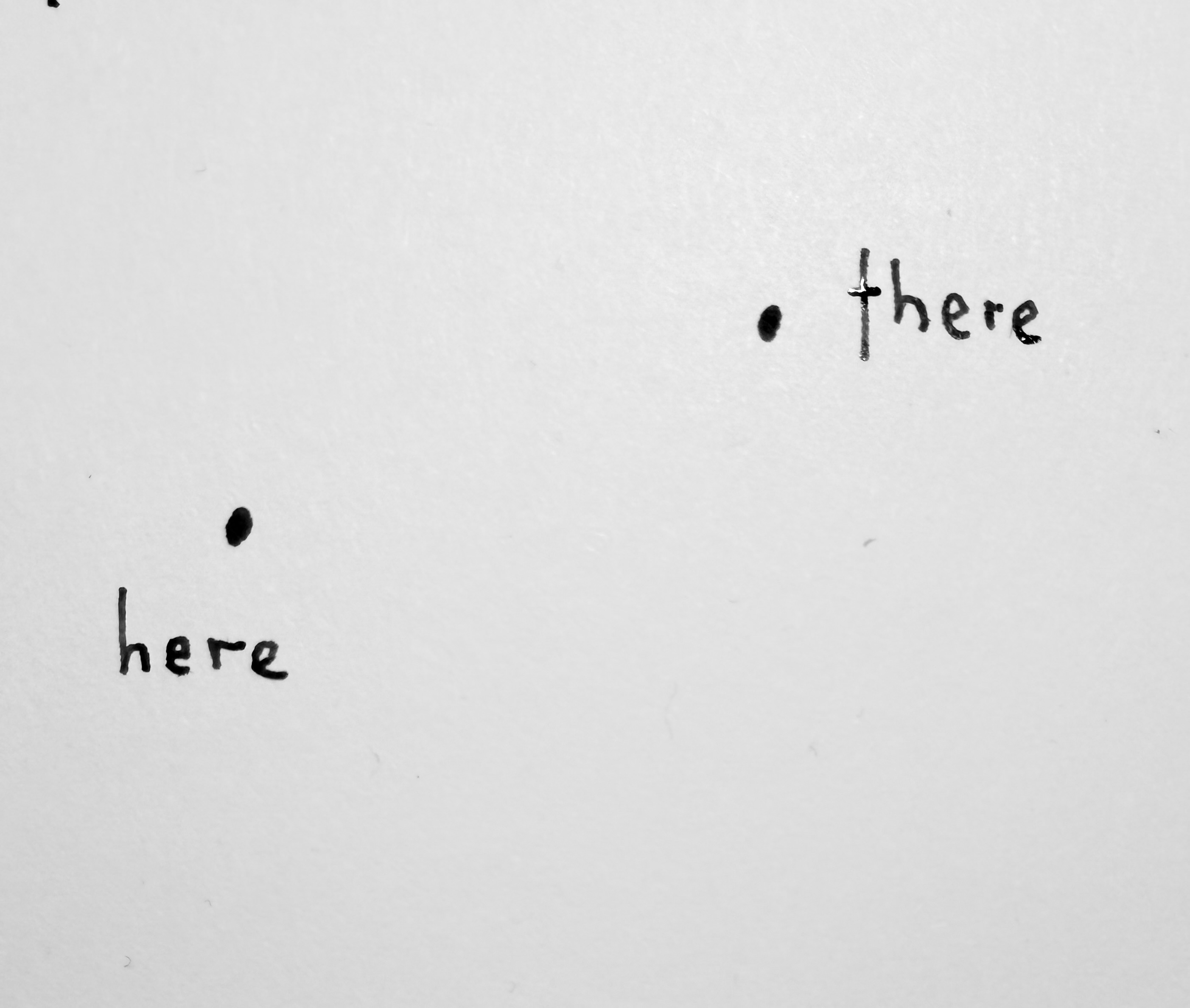
…so, sometimes the most exotic places are the least “foreign.” It is the subtle differences that are most striking: the way everyone says hello when they enter a French shop; the way people in northern European countries walk around without umbrellas or rain jackets, unbothered by a bit of wet weather; the way Italians gesticulate for even the simplest acts of communication.
The best word to express this feeling is French: dépaysement, roughly translated as “decountrified” (sic). You are literally taken out of your country, taken out of the assumptions with which you grew up.
I have lived in and visited countries that are significantly different from my European roots—in the Middle East, Asia, and Africa. However, the cultural gulf between us is often so great that I cannot suspend my disbelief enough to leap across that chasm. It feels so foreign that it ceases to feel odd at all. It is normal in extraordinarily hot places that people dress entirely differently. It is normal that they do not use my alphabet, rendering words unintelligible to me. It is normal that they worship other gods and follow other prophets.
In some ways, the strictures of Calvinism are stranger to me, a Western European, than the Sunnah of Mohammed. Finnish words are more disconcerting than Asian scripts that resemble beautiful drawings. It is as though a slight twist is indeed stranger than something altogether of another universe.
And when one experiences this slight “defamiliarization”, as noted by the Russian formalists about literature, it creates enough distance to question one’s own beliefs, behaviors, and assumptions. In some ways, that defamiliarization needs to be familiar enough to be credible rather than dismissed as something merely exotic or outlandish. Something relatively familiar, yet meaningfully different, can be deeply disquieting.
I am in France now, so I shall focus on that experience and on this idea of strangeness within the familiar here in the Dordogne.
I was thinking about this exact phenomenon as we finished dinner outside an evening or two ago. Three very different issues came to mind.
The first was the Roquefort cheese being passed around the table. Roquefort is a blue cheese aged in special caves that allow the remarkable blue-green mold, Penicillium roqueforti, to flourish within its creamy ewe’s milk substrate. Given many people’s concerns about mold and hygiene, it seems odd that anyone would enthusiastically spread it onto chunks of bread and eat it with delight. Here, it feels perfectly normal. Elsewhere, people might turn up their noses at such a pungent cheese.
Interestingly, some of the most significant cultural insights during my life have occurred around food and meals. I have learned much about the world simply by tasting different things that I normally would not. I do suspect that broader tastes often lead to broader perspectives.
The second issue was retirement. In the United States, retirement is often viewed almost as a failure. One should work until one expires. It is as though the whole purpose in the United States is to work. In France, by contrast, retirement is generally regarded as a well-earned freedom from the obligations of work and an opportunity to reclaim some of the liberty one enjoyed earlier in life. It is celebrated and honored as a just reward and a time to appreciate the massive creative potential of leisure.
Somehow, we seem to have lost our way regarding the mainstream concept of freedom in the United States. To be free, one must first be economically free in our global capitalist world. Some of the current global unrest stems from the potential future inability of ordinary people to attain that economic liberty and, consequently, the rewarding freedom to stop working at some point in their lives.
The final point is perhaps the most important. Philosophy plays a role in ordinary public life in France. Philosophers such as Bernard-Henri Lévy, Michel Onfray, and Cynthia Fleury appear regularly on television. Thought itself remains part of the public conversation.
That is not to say that everyone here in France is a philosopher, but there is a greater emphasis on thinking well and on intellectual discourse as part of daily life. It is a striking contrast with what is currently happening in the United States.
At first glance, the media landscapes seem similar. There are newspapers, television channels, podcasts, and online newsletters. Yet if you watch the evening news, a few differences become immediately apparent.
First, there is a breadth of coverage that offers a wider perspective. In France, the news routinely moves between local, national, and international stories. No single story tends to dominate an entire broadcast. There is also more debate among genuinely different points of view. Interviewers ask pointed questions calmly, and there is an expectation of real dialogue. It can be uncomfortable. It can be provocative. But it feels alive.
It is interesting to see how the debate over free speech has evolved in the United States over the past few decades. I have worked on free-speech issues in schools for more than thirty years, and it has never been easy work because the broader context is so very challenging and oddly combats true free speech. One result of this work was this booklet, created mainly by some of my colleagues. It is a wonderful publication, but you have to have enough attention to read it carefully and take it on board—that is not simple. Basically, it asks young people to look at different valid ideas and analyze the evidence and reasons behind those ideas as well as the assumptions. It proposes good critical thinking that leads to freer thought.
There is a great deal of rhetoric about free speech in America right now and about its constitutional protections. Yet that rhetoric often fails to translate into reality. Each side of the political spectrum tends to constrain speech when it gains power. One can be canceled by either side. The result is a narrowing of discourse and a weakening of genuine freedom of expression. In America, it is seen as a weakness rather than a strength to abandon the party line. Propaganda is alive and well in Washington DC and across the media landscape these days unfortunately. The concept of strong critical thinking, as espoused by Dr. Richard Paul, by embracing in a fair-minded way opposing points of view is increasingly rare.
It is therefore interesting to be in a place where there is less rhetoric about the concept of free speech and more free speech in actual action; free speech feels alive in France for the time being.
Perspective, liberty, and open thought—these are the prerequisites for finding meaning and purpose in life thus leading us to satisfaction and happiness. Without these preconditions, life is mere drudgery. Everyone deserves broader perspectives, more freedom, and better critical thinking. That should be one of the fundamental goals of all governments.
Of course, every country is hypocritical in the sense that there is always a gap between its stated values and its lived reality. The question is how wide that gap becomes and whether we can even observe the gap in our own countries, blinded by our assumptions and our patriotism.
Deeply understanding different cultures and countries is essential to understanding our own. Across the world, many people are criticizing globalism and international perspectives. Nativism and populism are on the rise. Yet these ideologies often seek to narrow one’s field of vision rather than expand it.
That is a serious problem.
We need to be dépaysés, even in our own towns and homes, on a regular basis if we are to overcome our “native blindness” and come to understand the world around us and ourselves more fully.
Keep well, and seek out difference to better understand us...
Beautiful read! Thank you. I have shared with pals. So pleased we are in touch, Dominic!